The Minibus: Small Groups, Bus Rules
A minibus takes 16 to 19 passengers plus the driver. It drives like a large van, yet Spanish law classes it as a bus, and that shapes everything below.
A small vehicle with bus paperwork
Count the seats, driver's included: with more than nine, the law treats the minibus as a bus, so it needs a public transport authorisation just as a coach does. With 16 passengers its driver carries a D1 licence, valid up to 16 passengers and 8 m; with 17 to 19, the driver needs category D. You must be 21 for D1, or 18 with a CAP from the ordinary initial qualification, and in that case only on Spanish roads until 21.
Typical models
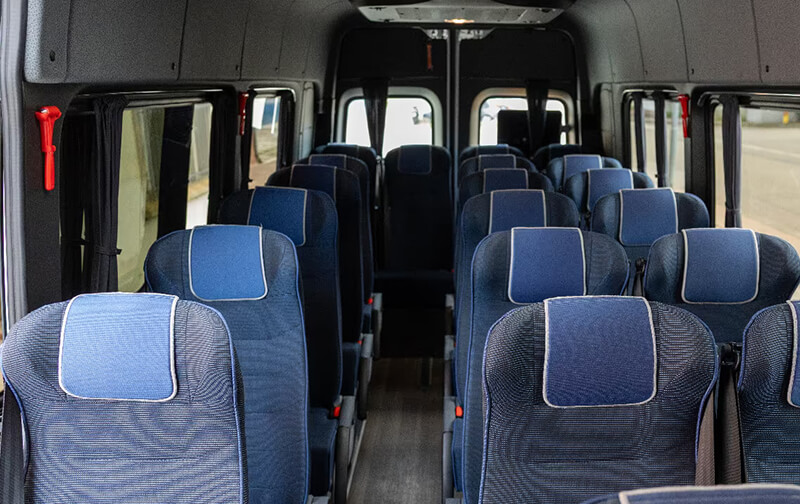
The photos show typical models in this size. Which vehicle runs depends on the partner operator that takes the booking.
Minibus (16 to 19 seats)
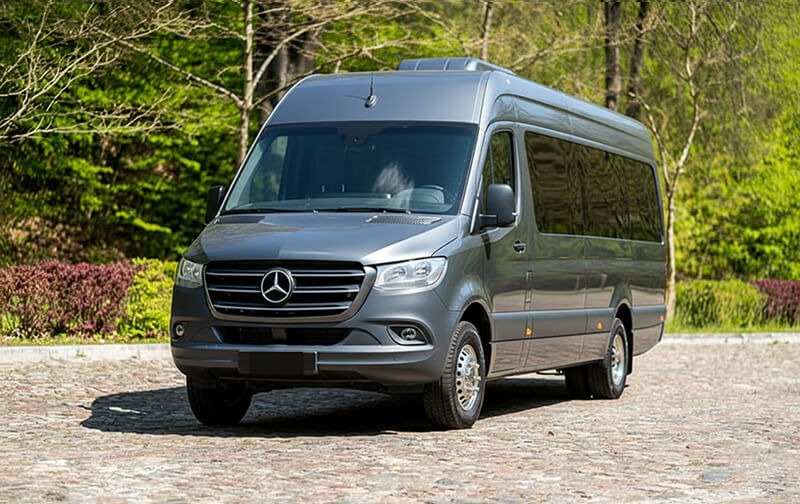
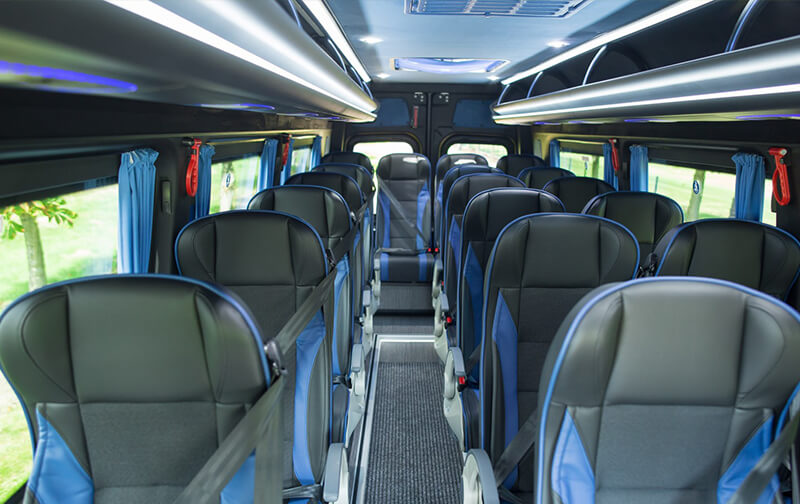
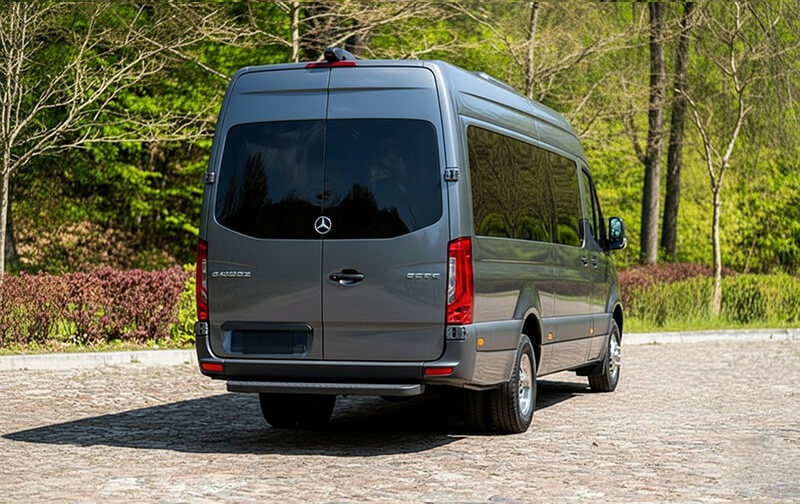
Mercedes Sprinter
19 passengers · 15 bags
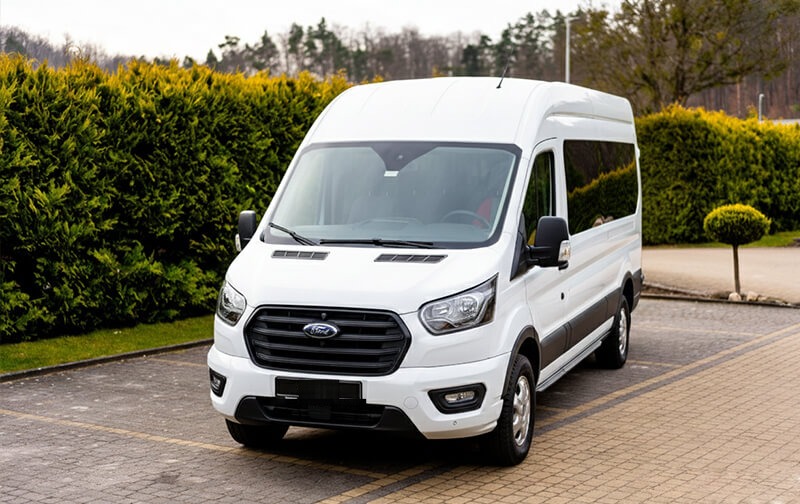
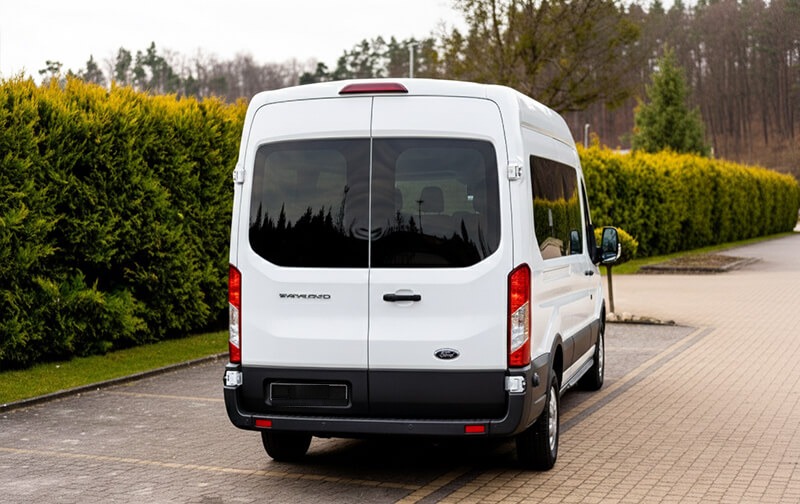
Ford Transit
16 passengers · 12 bags
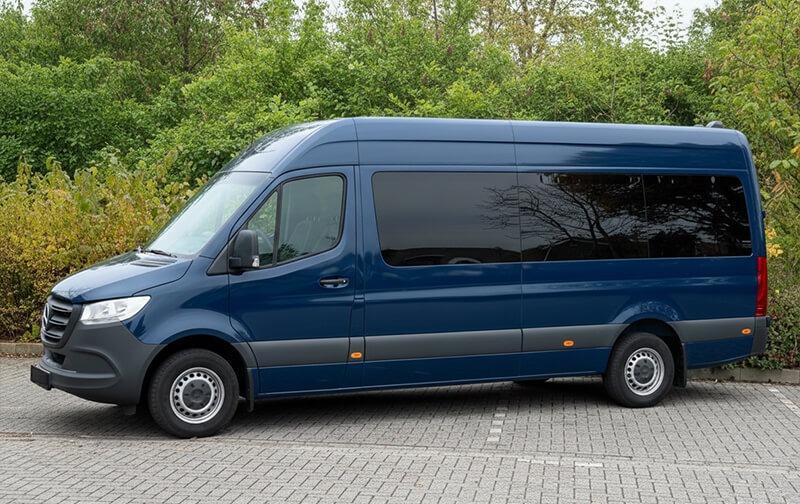
Mercedes Sprinter
17 passengers · 14 bags
Seats and luggage space
- Seats: 16-19 passengers plus the driver
- Luggage: Rear luggage space; limited when every seat is taken
On board, and the rules that apply
- Category D1 covers vehicles built for up to 16 passengers besides the driver and up to 8 m long, so it suits a 16-passenger minibus; one for 17 to 19 passengers needs category D, for more than eight passengers besides the driver. For D1 the minimum age is 21, or 18 for holders of the CAP professional qualification obtained through the ordinary initial qualification, who may then drive only within Spain until they are 21 (Reglamento General de Conductores, art. 4)
- With more than 9 seats including the driver, a minibus counts as a bus (autobús) and is run under a public transport authorisation
- Seat belts must be worn wherever they are fitted
- In vehicles with more than nine seats, children aged three or over who are 135 cm tall or shorter use an approved child restraint suited to their size and weight; where none is available they use the seat belt, if it suits their size and weight (RGC art. 117.2)
Children and belts
Belts are worn wherever fitted. Because a minibus has more than nine seats, a child of three or older standing 135 cm or less travels in an approved restraint matched to height and weight; if the vehicle has none, the belt is used when it fits the child. For a junior team or a family group, say how many younger children travel so restraints can be arranged where possible.
Luggage and city rules
The rear luggage space fills fast when every seat is taken. Count the cases before you book; a couple of spare seats can absorb the overflow, or a larger vehicle may suit better.
Size does not exempt a minibus from city rules. Barcelona's Zona Bus applies to every vehicle with nine or more seats, so every minibus needs that permit, and special areas such as the Sagrada Família and Park Güell are booked in advance. Low-emission zones apply as well.
What organisers ask us
Can a minibus meet us at Madrid-Barajas?
Yes. Buses there use the T4 bus terminal or the T1 bus park rather than the T4 arrivals road, and the operator confirms the meeting point.
Is a minibus allowed into Granada's old quarters?
The Albaicín and the Realejo have camera-controlled access. A small vehicle can enter only where the operator holds the permit; otherwise the group walks up.
How many people can travel in a minibus?
16 to 19 passengers plus the driver, depending on the model. A guide or tour leader takes one of those seats.
More group trips we arrange
- Coaches for Conferences, Incentives and Company Days
- School Trips by Coach: The Rules Teachers Need
- Team Travel by Coach, from Youth Squads to Clubs
- Wedding Transport for the Couple and Every Guest
- Wine Country by Coach: Rioja to the Penedès
- Coach Day Tours: Labels, Distances and Timed Entries
- Cruise Transfers: Terminal, Airport and Shore Day
- Accessible Group Travel with an Adapted Vehicle