Six Vehicle Sizes, from Full Coach to Car
Choose by headcount and luggage first, then by the streets on the route. Every vehicle comes from a licensed partner operator, driver included.
Seats, licences and labels
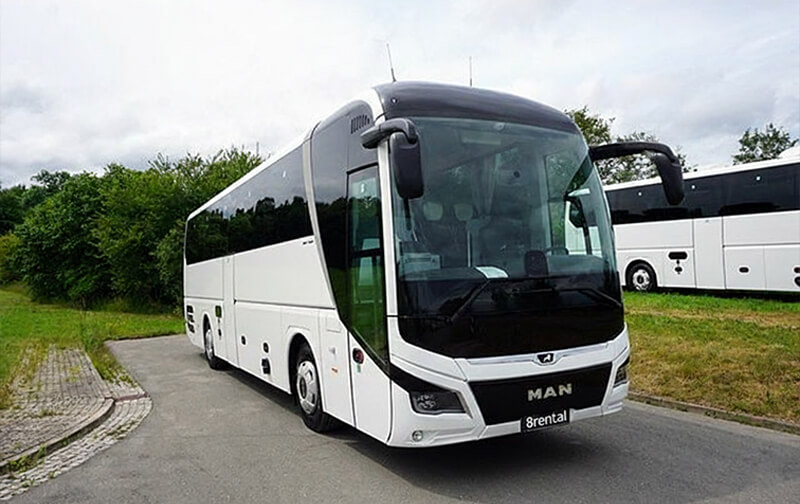
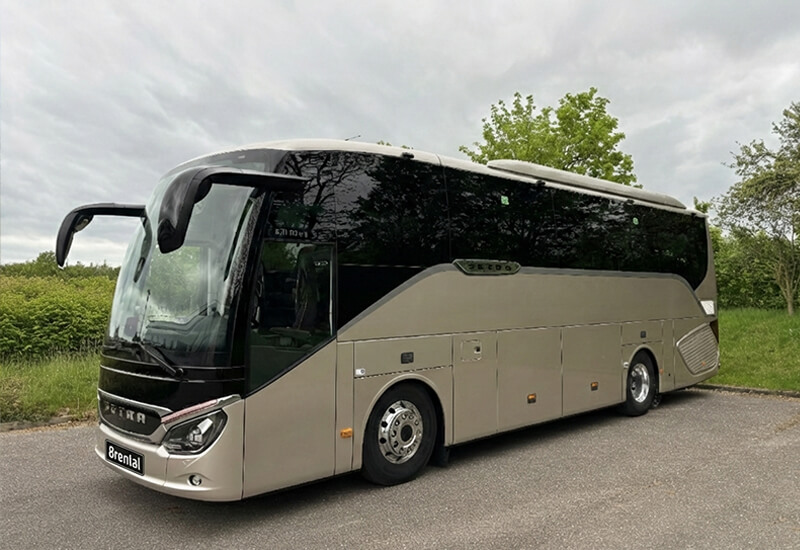
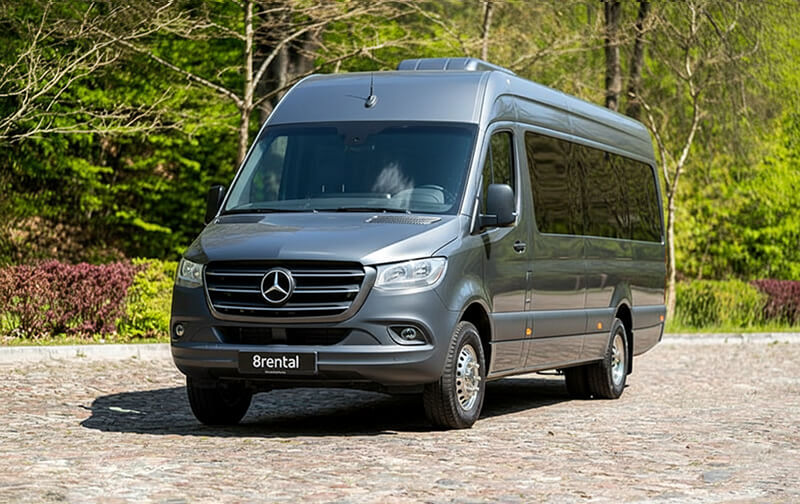
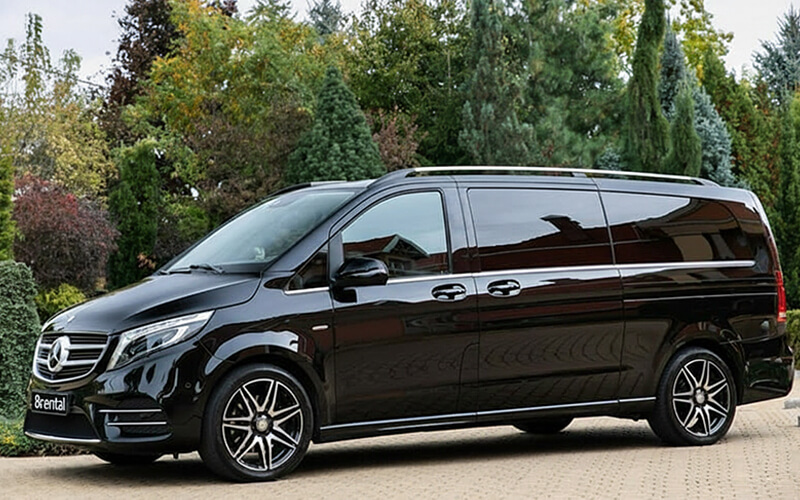
A full-size coach seats 49 to 57, a midibus 29 to 35 and a minibus 9 to 16 passengers. The executive Sprinter-style minibus carries 8 to 16, with a luggage area behind the last row. A car with driver takes up to three in comfort, or eight in a van-type car. The adapted minibus trades seats for wheelchair positions, so its capacity depends on the layout.
Above nine seats including the driver, the vehicle is a bus in law: it runs under a bus authorisation, carries a tachograph and needs a driver with category D, or D1 for up to 16 passengers and 8 m. For low-emission zones, a Euro VI diesel coach carries the green C label and a Euro IV or V coach the yellow B label, which some cities already restrict.
What organisers ask us
How fast can a coach go on a Spanish motorway?
Up to 100 km/h on motorways and 90 km/h on other roads outside towns; 80 km/h if passengers stand or there are no belts. School and child transport runs 10 km/h lower.
Which vehicle suits a narrow old town?
A midibus or minibus copes better. Some centres still mean a walk: Granada's Albaicín is too narrow for coaches, and around Cordoba's Mezquita-Catedral only microbuses are allowed.
Can a car with driver take nine passengers?
No. A VTC car has at most nine seats including the driver's. From nine passengers, book a minibus.
Choose a vehicle
- Full-size coach (autocar) — Seats: 49-57
- Midi-coach (midibús) — Seats: 29-35
- Minibus (minibús) — Seats: 9-16 passengers plus the driver
- Executive Sprinter-style minibus (minibús ejecutivo) — Seats: 8-16 passengers plus the driver
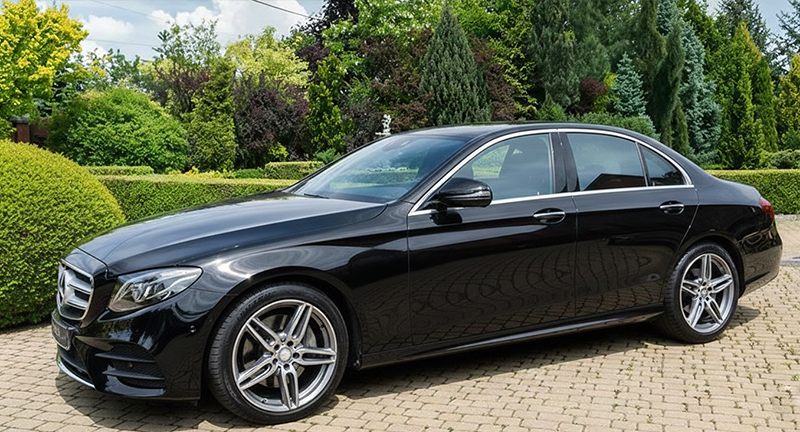
- Executive car with driver (VTC, vehículo de turismo con conductor) — Seats: 1-3 (up to 8 passengers in a van-type car)
- Wheelchair-accessible minibus (minibús adaptado) — Seats: Varies by layout; wheelchair positions replace seats