The Full-Size Coach: 49 to 81 Seats
The full-size coach is the default for large groups, airport and cruise transfers, festivals and tours of several days. It carries the most people and the most luggage, but it cannot go everywhere.
What the paperwork means
In Spanish law any vehicle with more than nine seats, counting the driver's, is a bus, and carrying passengers for payment needs a public transport authorisation. Hiring it for a group counts as discretionary transport, and the whole vehicle is contracted. The driver holds a category D licence and the professional qualification, shown as code 95 on the licence or on a qualification card. A tachograph records driving and rest, and the driver's blood alcohol limit is 0.3 g/l.
Typical models
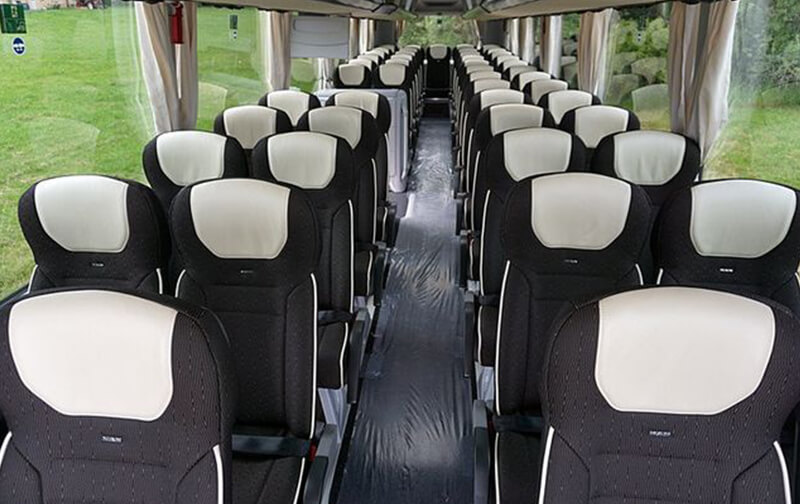
The photos show typical models in this size. Which vehicle runs depends on the partner operator that takes the booking.
Standard coach (49 seats)
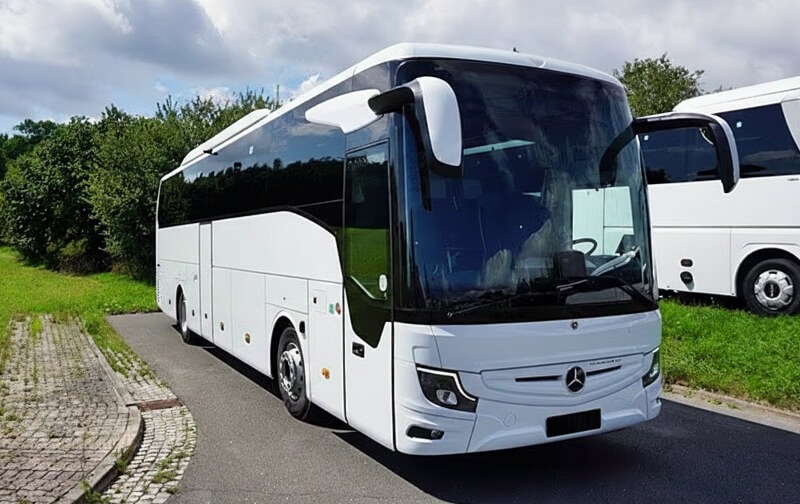
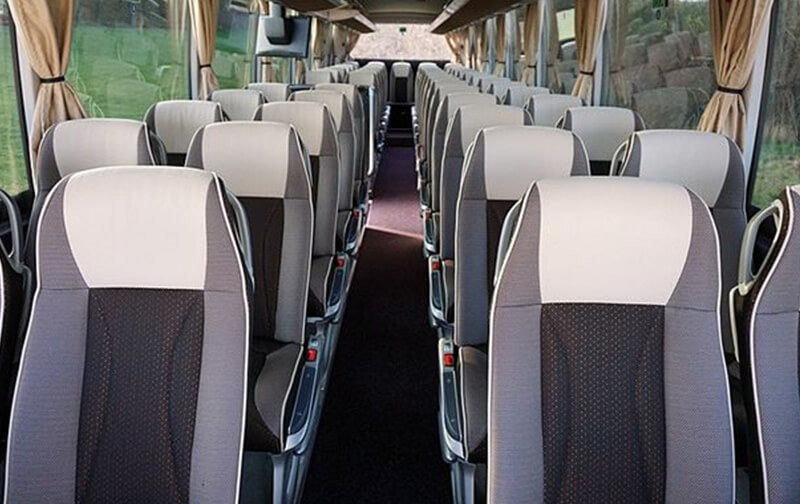
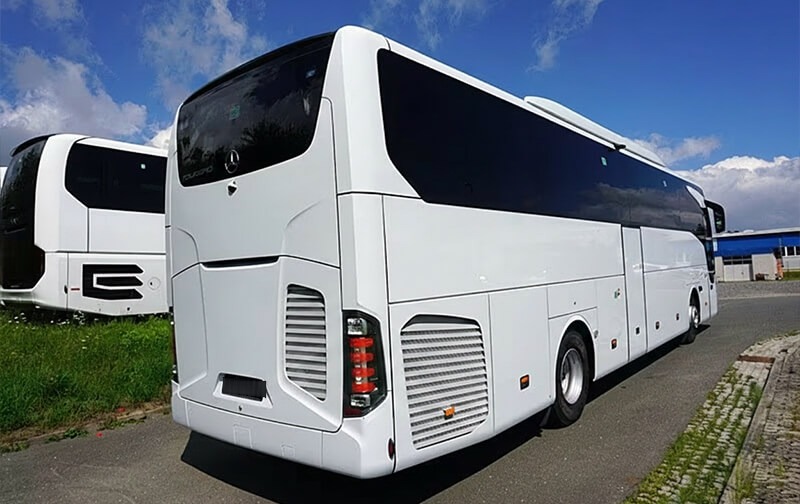
Mercedes Tourismo 15 RHD
49 passengers · 49 bags
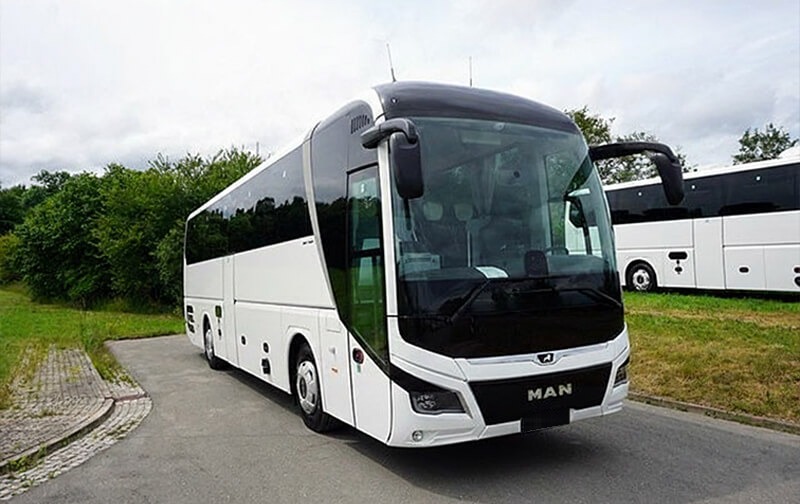
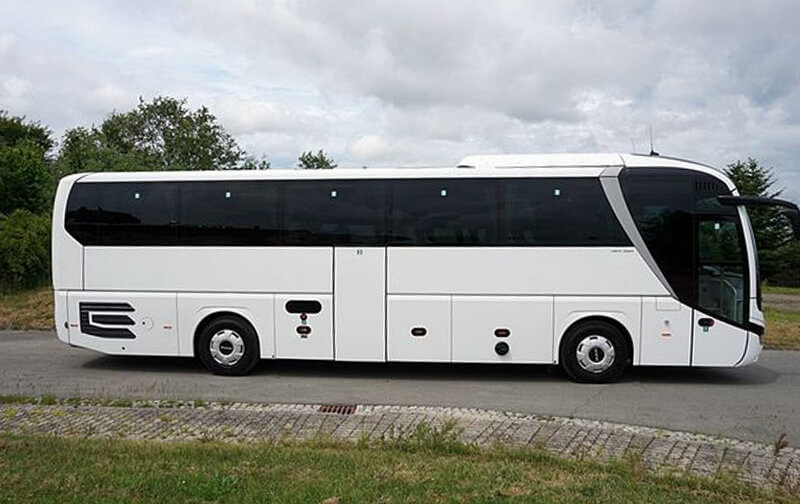
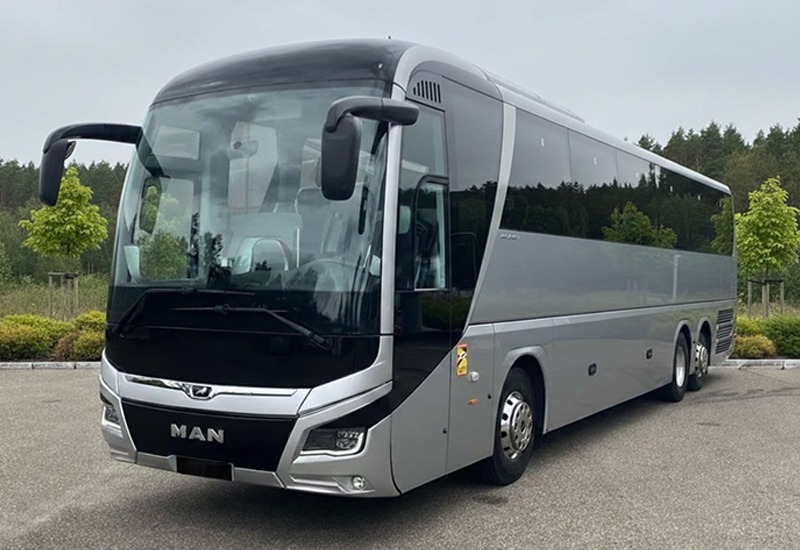
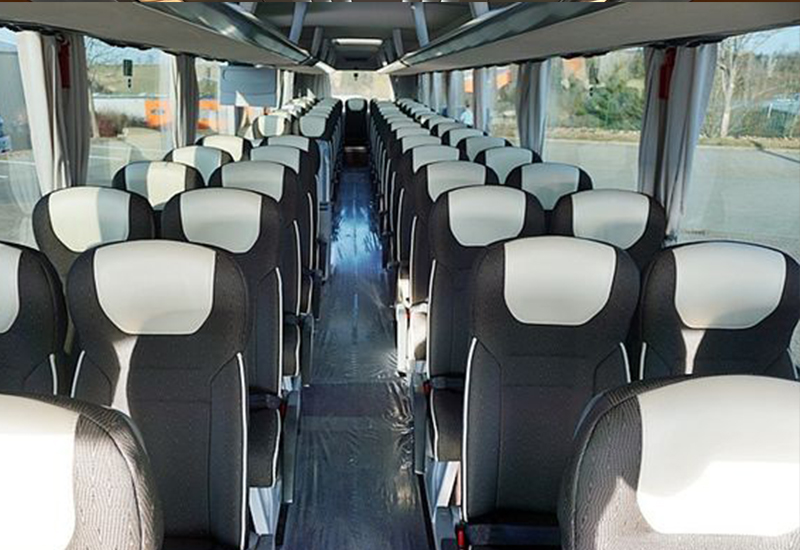
MAN R07 Lion Coach
49 passengers · 49 bags
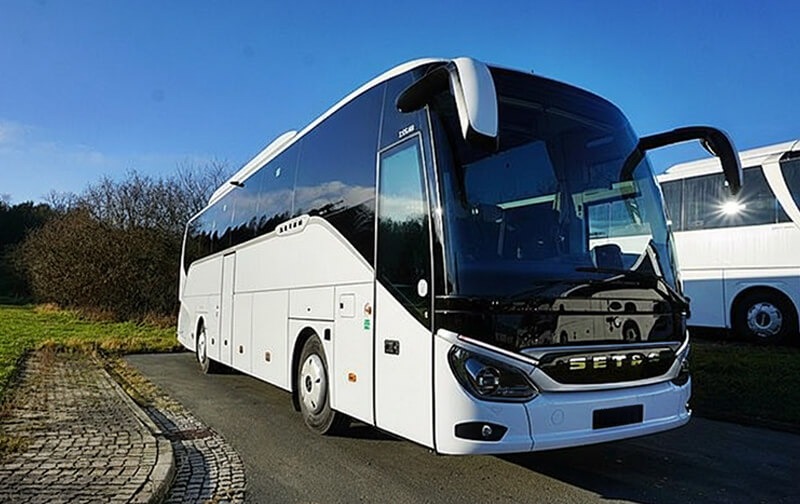
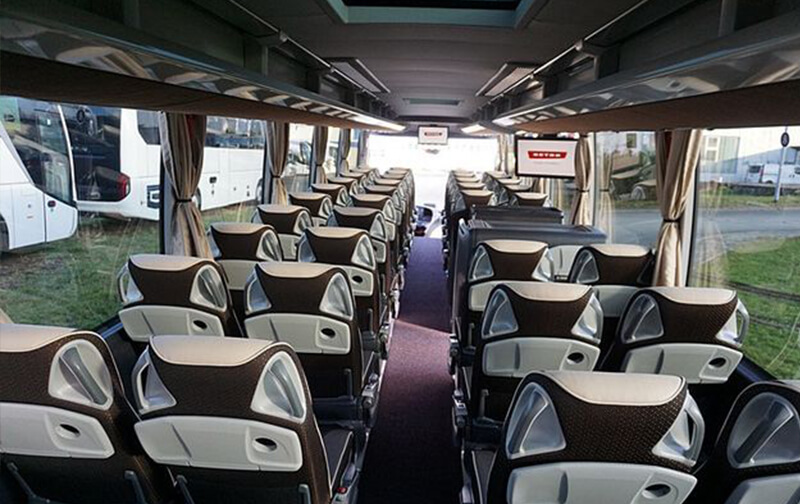
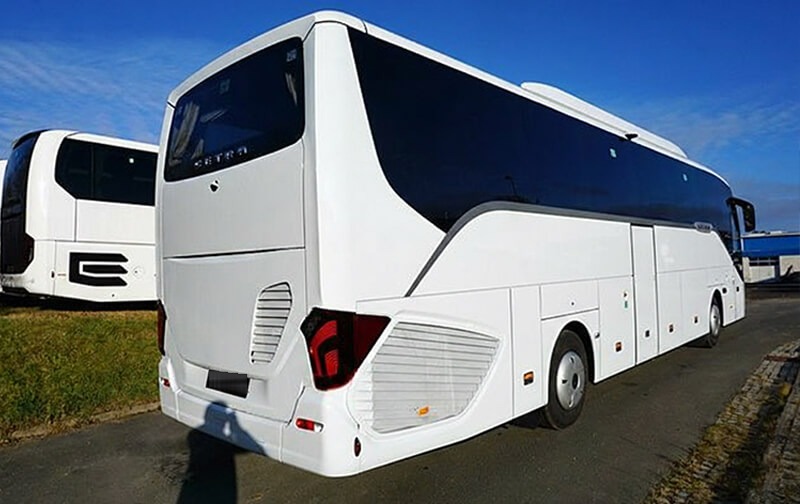
Setra S 515 HD
49 passengers · 49 bags
Large coach (53 to 59 seats)
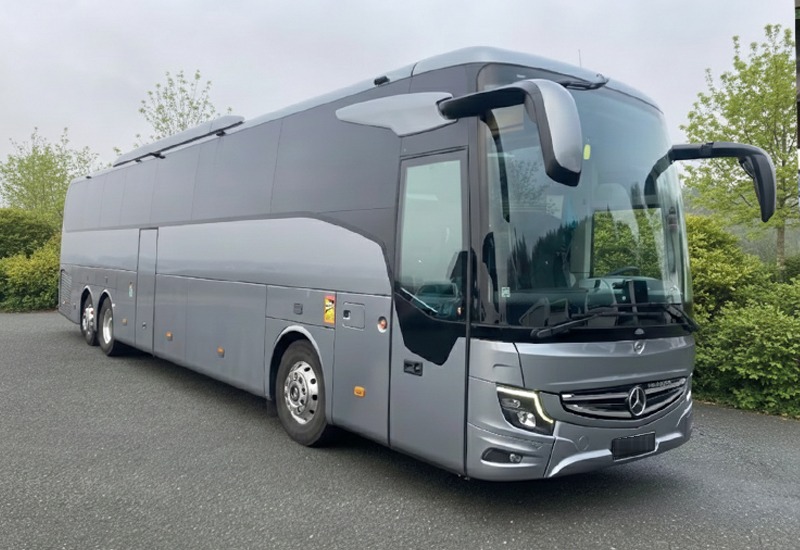
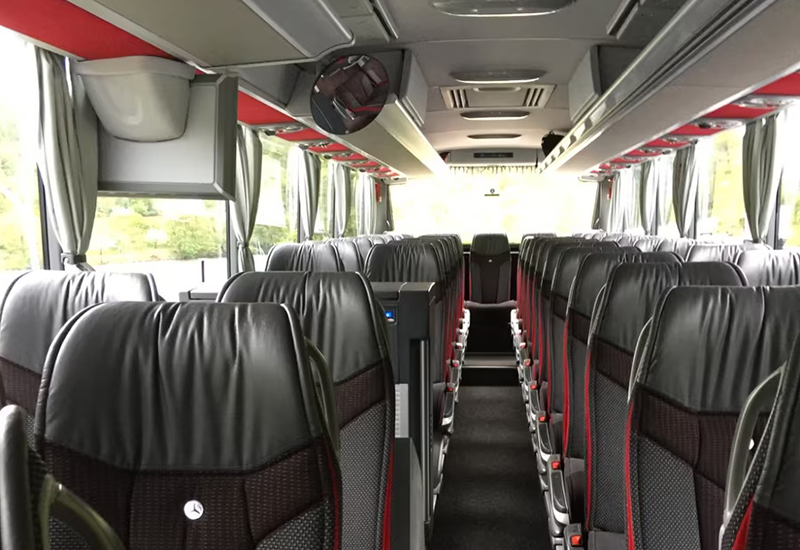
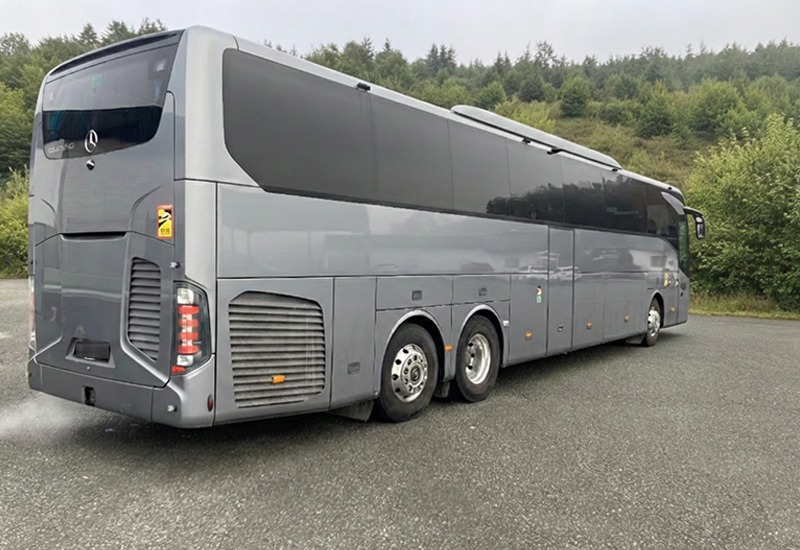
Mercedes Tourismo 17 RHD
59 passengers · 59 bags
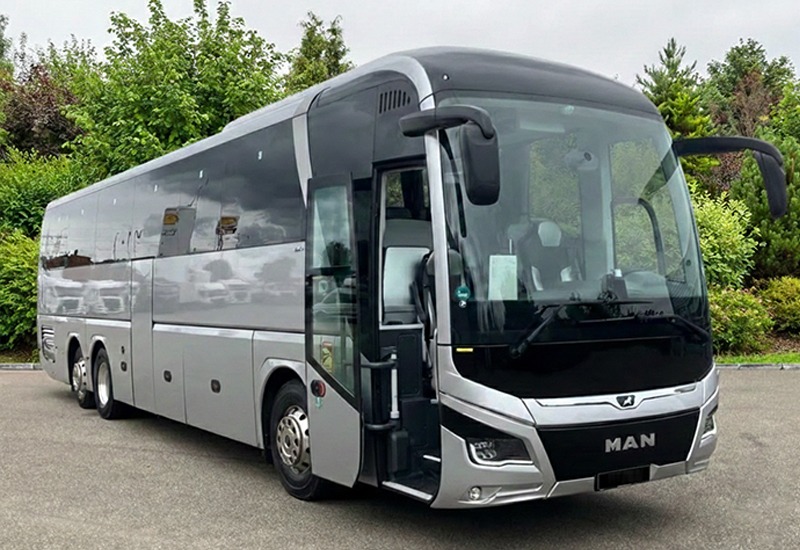
MAN R08 Lion's Coach
57 passengers · 57 bags
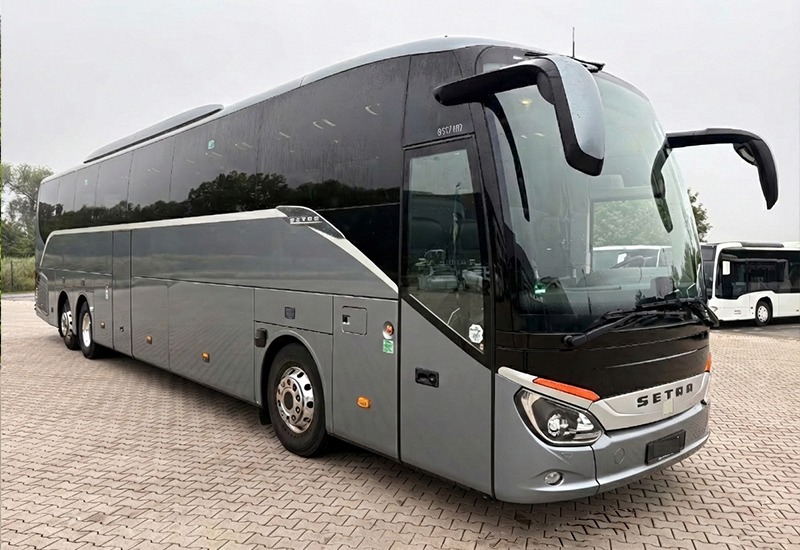
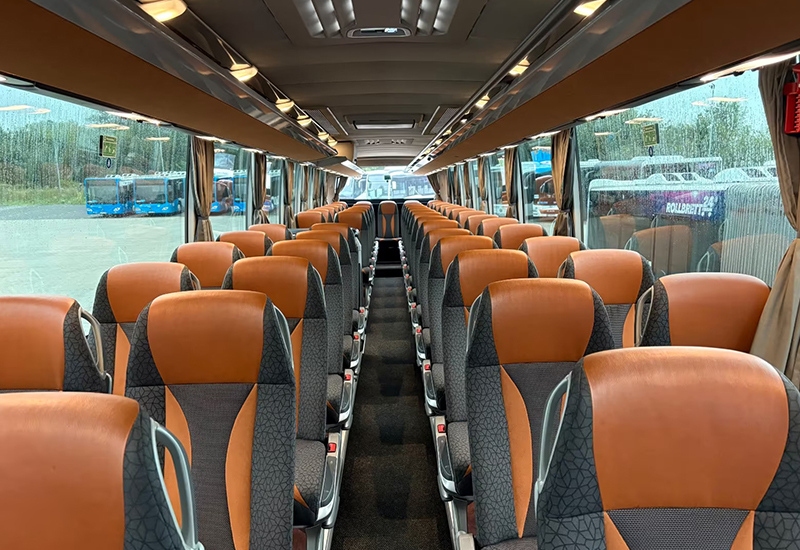
Setra S 517 HD
53 passengers · 53+2 bags
Double-decker coach (around 80 seats)
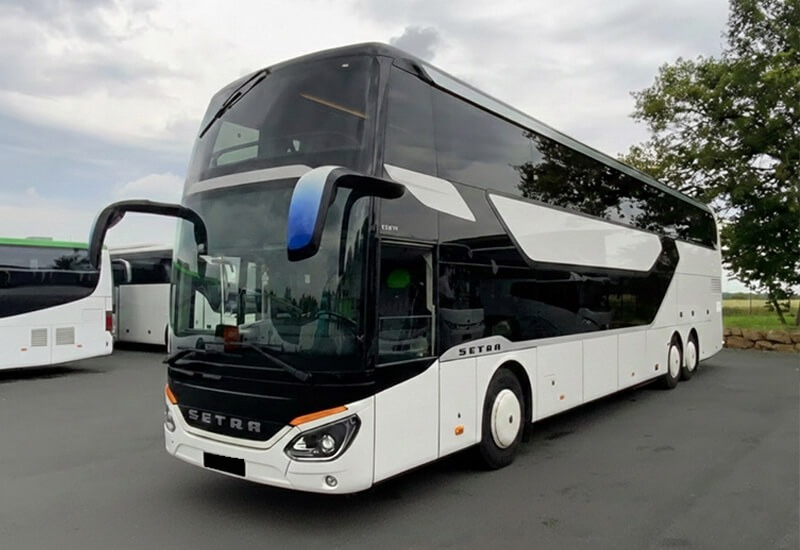
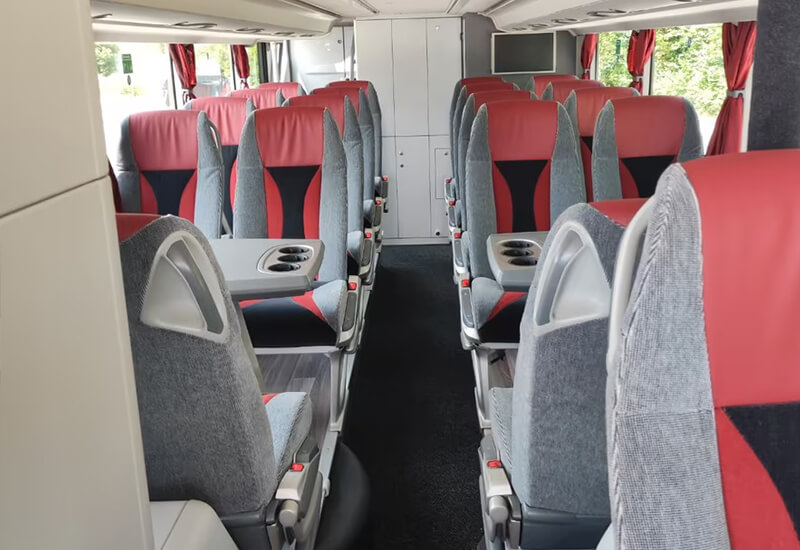
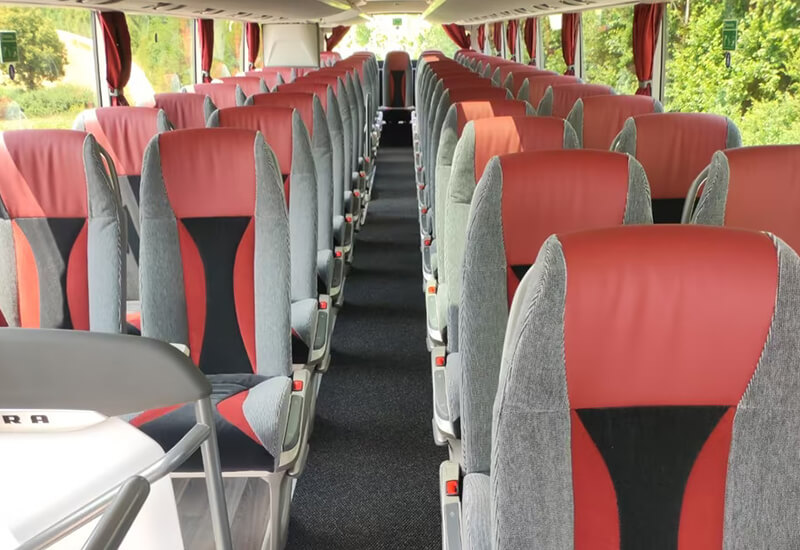
Setra 531 DT
81+2 passengers · 81+2 bags
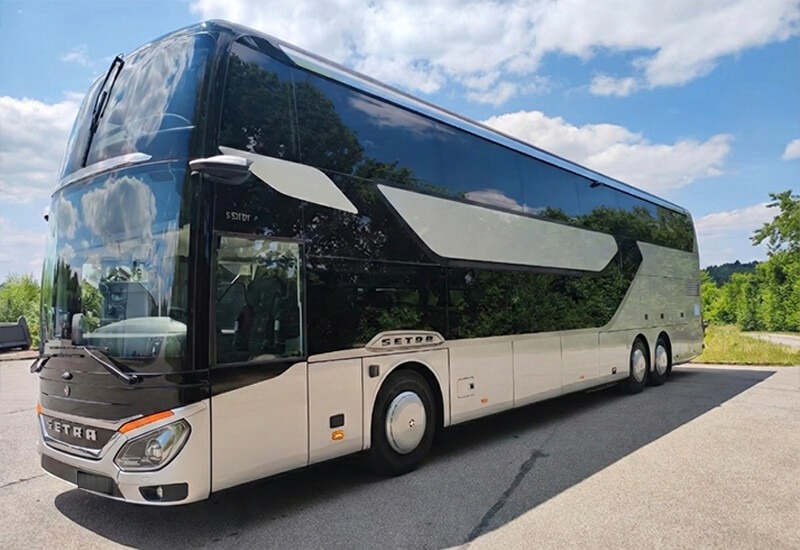
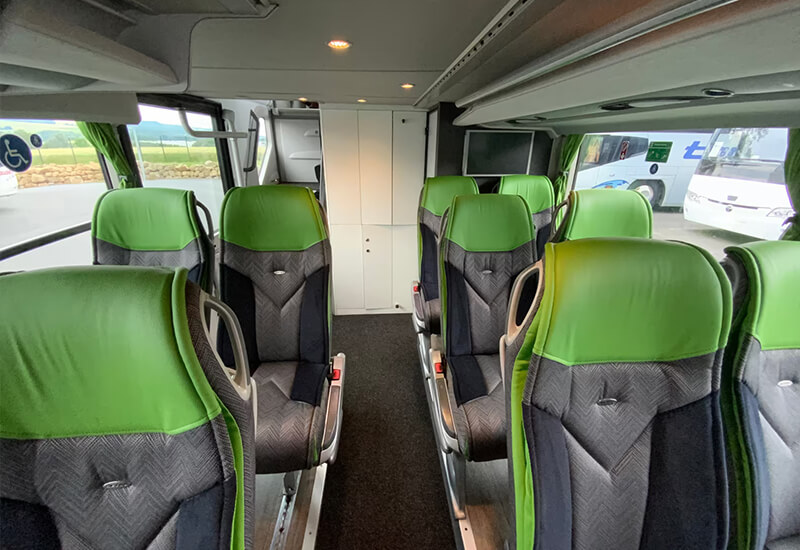
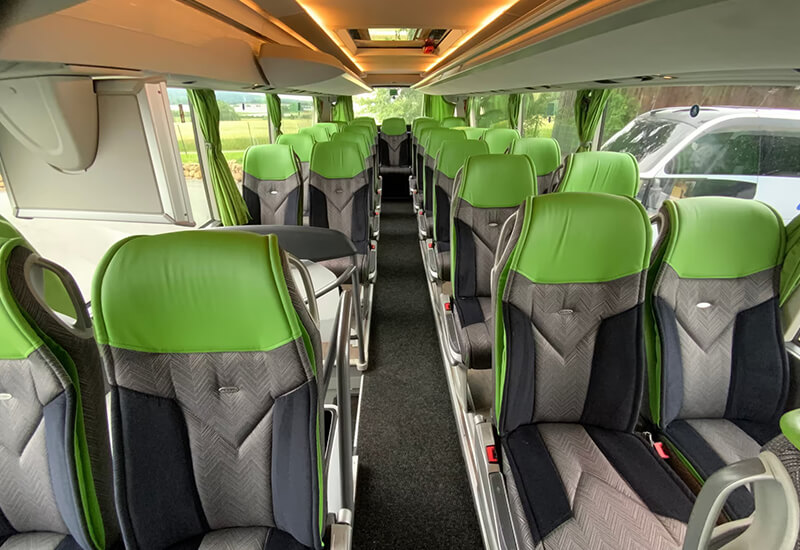
Setra 431 DT
80+1 passengers · 80 bags
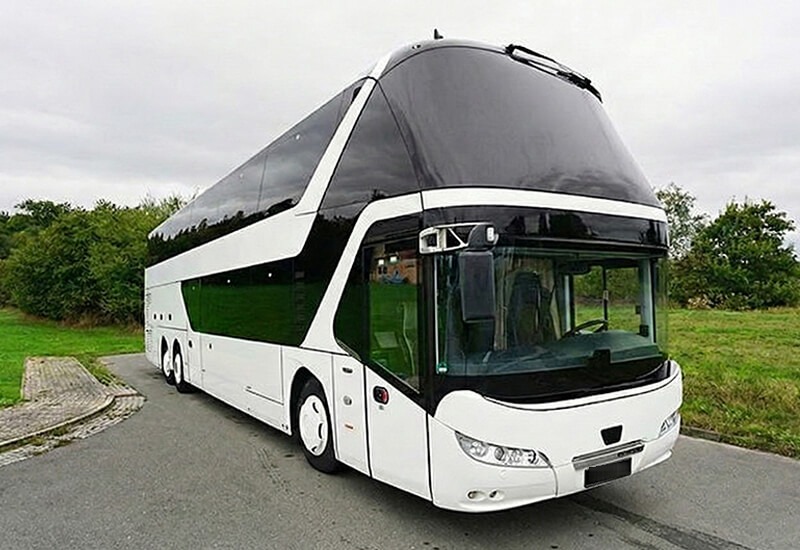
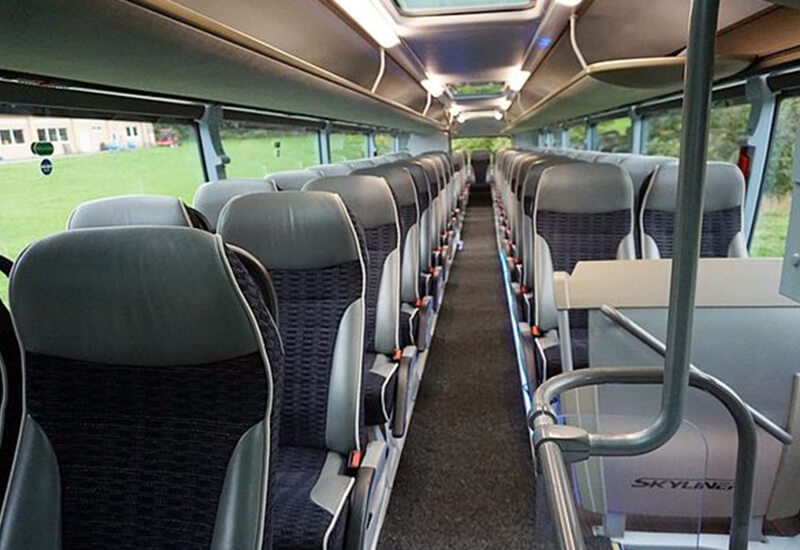
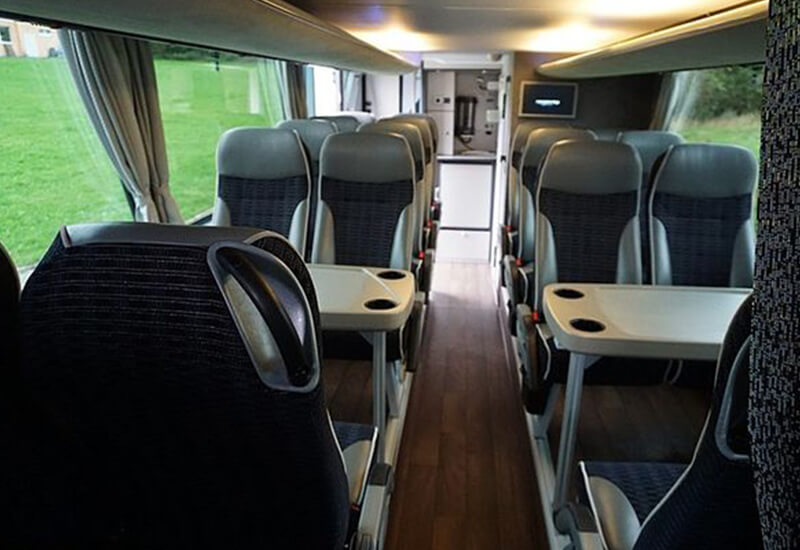
Neoplan Skyliner
79+1 passengers · 79 bags
Seats and luggage space
- Seats: 49-81
- Luggage: Underfloor luggage holds
On board, and the rules that apply
- Carrying passengers for payment by road in Spain needs a public transport authorisation (LOTT art. 42); group coach hire is discretionary transport (transporte discrecional), contracted as a rule for the whole vehicle (LOTT art. 99.3)
- A bus or coach (autobús o autocar) is a motor vehicle with more than 9 seats including the driver (Reglamento General de Vehículos, annex II)
- The driver holds a category D licence, for vehicles built to carry more than eight passengers besides the driver (Reglamento General de Conductores, art. 4); professional drivers also hold the professional qualification (CAP), shown by the EU code 95 on the licence or on a driver qualification card (Real Decreto 284/2021)
- Outside built-up areas, buses may drive at up to 100 km/h on motorways (autopistas and autovías) and 90 km/h on other roads; the limit is 80 km/h on any road outside built-up areas if passengers are standing or the bus has no seat belts (RGC art. 48.1)
- Seat belts must be worn wherever they are fitted; in vehicles with more than nine seats, passengers are told so by the driver, the guide or the group leader, by audiovisual means or by signs at each seat (RGC art. 117)
- Drivers of passenger vehicles with more than nine seats may not exceed 0.3 g/l of alcohol in the blood (0.15 mg/l in exhaled air) (RGC art. 20)
- A tachograph records driving, breaks and rest, and the EU drivers' hours rules apply
- For low-emission zones, a diesel coach meeting Euro VI is classed C (green label) and one meeting Euro IV or V is classed B (yellow label) (Reglamento General de Vehículos, annex II.E)
On the road
Outside towns a coach may travel at up to 100 km/h on autopistas and autovías and 90 km/h on other roads; with standing passengers or no belts the cap is 80 km/h. Belts are compulsory wherever fitted, and on a coach someone must say so: the driver, the guide, the group leader, a screen or a sign at every seat. For low-emission zones, a Euro VI diesel coach carries the green C label and a Euro IV or V coach the yellow B label. Some cities are closing their zones to B, so ask which label the coach offered has.
Where a full coach cannot go
Granada's Albaicín is too narrow. Around Córdoba's Mezquita-Catedral only microbuses are allowed. Alicante's castle takes no full-size coaches, so groups use the lifts. Segovia's panoramic route admits buses up to 13 m long and 4 m high, one way only. Toledo has three coach stops and none at Zocodover. In these places the coach sets down at the edge and the group walks, or a smaller vehicle does the last stretch.
What organisers ask us
How much luggage fits in a full-size coach?
The underfloor holds are the largest of any vehicle type. Still, give the real count for a cruise or a multi-day tour, plus bulky items such as instruments or sports kit.
Can the coach park near the hotel overnight?
That depends on the city. Madrid has signed coach bays, including long-stay parking; elsewhere the operator confirms where the coach waits.
Is a 57-seat coach right for 57 people?
Only if nobody needs a spare seat. With a guide, a tour leader or wheelchair users, check the seat count against the full passenger list.
More group trips we arrange
- Coaches for Conferences, Incentives and Company Days
- School Trips by Coach: The Rules Teachers Need
- Team Travel by Coach, from Youth Squads to Clubs
- Wedding Transport for the Couple and Every Guest
- Wine Country by Coach: Rioja to the Penedès
- Coach Day Tours: Labels, Distances and Timed Entries
- Cruise Transfers: Terminal, Airport and Shore Day
- Accessible Group Travel with an Adapted Vehicle