Accessible Group Travel with an Adapted Vehicle
On a private hire, accessibility is arranged booking by booking. The EU passenger rights that cover scheduled coaches do not reach it, so what you tell the operator is what gets arranged.
What the operator needs from you
Give the number of wheelchair users, and say whether each stays in the chair or transfers to a seat. Give each chair's type, size and weight; electric chairs are far heavier than manual ones. Add walking frames, scooters and any medical equipment. Each wheelchair position replaces seats and takes luggage room, so these numbers decide whether one adapted minibus is enough or the group needs two vehicles.
The EU rules for bus and coach passengers give disabled travellers assistance on scheduled services of 250 km or more, with 36 hours' notice. A hired coach or minibus is not a scheduled service, so help on board and at each stop is agreed with the operator for your trip.
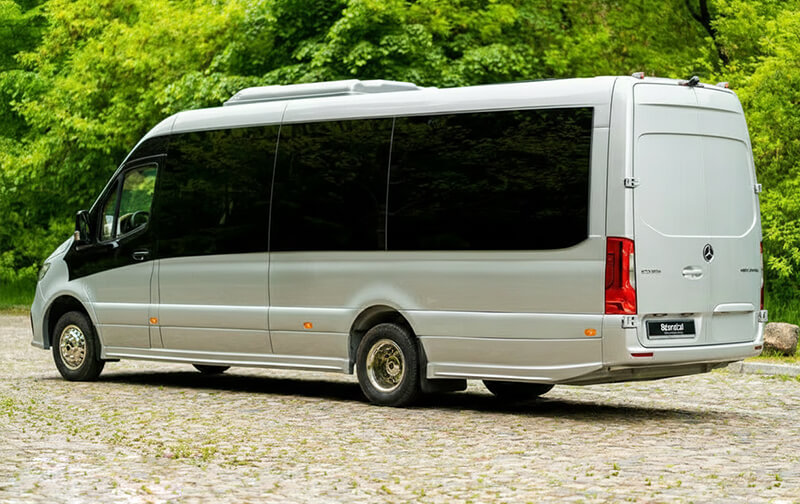
Setting down closer to the door
Town halls gained a new power on 1 October 2026: they can create special set-down and pick-up arrangements for disabled passengers and those with reduced mobility, such as entry into restricted streets or more time at the stop. Whether a town has used it varies, so the operator asks about each stop on your route. Barcelona already reserves spaces for adapted coaches at the Sagrada Família, Trafalgar, Ciutadella and La Pedrera.
Rules the group organiser needs
- EU bus and coach passenger rights give disabled passengers assistance on scheduled services of 250 km or more, if they tell the operator at least 36 hours before the trip
- Málaga's cruise terminal operator says its facilities are fully accessible and wheelchair assistance is available on request
Ports and festivals
A few fixtures on the Spanish calendar already plan for wheelchair users. At Málaga's cruise terminal, the company running the building says every area is accessible and a wheelchair helper can be requested. Sevilla's April Fair keeps parking for drivers with a disabled parking card on two streets beside the fairground, Avenida Maestranza Aérea and Calle Virgen de la Cinta, and marks step-free routes inside. In 2026 the Fallas offered a reserved mascletà viewing area that associations could book for up to 20 people with five days' notice; the 2027 details come later.
What organisers ask us
Does a minibus with a lift need a special licence?
The driver holds category D1, which covers vehicles for up to 16 passengers. The lift or ramp and the securing points are part of the vehicle.
Can a carer sit next to the wheelchair user?
That depends on the layout. Ask the operator for the seating plan of the vehicle offered before you confirm.
Do walking frames and scooters count?
Yes. List them with the wheelchairs. They take luggage space, so the operator sizes the vehicle with them included.
Cities
Vehicles with a driver
- Full-size coach (autocar) — Seats: 49-57
- Midi-coach (midibús) — Seats: 29-35
- Minibus (minibús) — Seats: 9-16 passengers plus the driver
- Executive Sprinter-style minibus (minibús ejecutivo) — Seats: 8-16 passengers plus the driver
- Executive car with driver (VTC, vehículo de turismo con conductor) — Seats: 1-3 (up to 8 passengers in a van-type car)
- Wheelchair-accessible minibus (minibús adaptado) — Seats: Varies by layout; wheelchair positions replace seats