The Adapted Minibus: Lift, Ramp and Secure Places
The adapted minibus is built around wheelchairs: a lift or a ramp at the door, and anchor points inside. How many people it takes depends on how many chairs come along.
Layout and capacity
Every wheelchair position takes the place of seats, and of some luggage room. A vehicle that seats 16 may carry far fewer people once three chairs are secured. Ask for the layout the operator proposes, with the number of chair positions and fixed seats, and check it against your passenger list. The driver holds category D1, for up to 16 passengers.
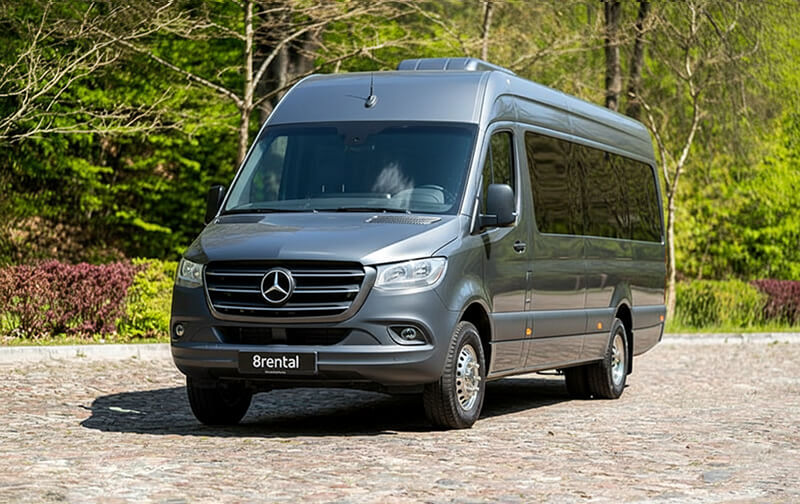
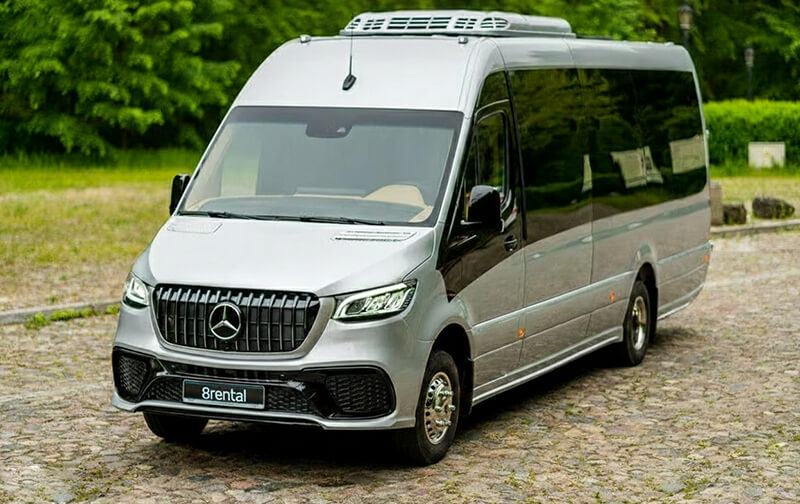
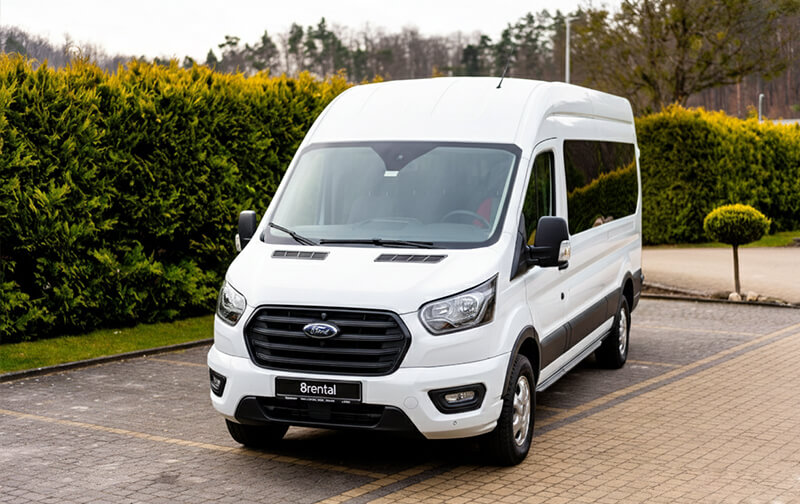
Seats and luggage space
- Seats: Varies by layout; wheelchair positions replace seats
- Luggage: Limited; wheelchair positions reduce luggage room
On board, and the rules that apply
- Lift or ramp access with wheelchair securing points
- Category D1 licence for up to 16 passengers besides the driver
- In school and child transport, seats for people with reduced mobility are reserved near the service doors where needed, and vehicles taking pupils with severe motor disabilities to special-education schools need aids for getting on and off (Real Decreto 443/2001, art. 4)
- From 1 October 2026, city councils may set a special regime for setting down and picking up children, older people and people with reduced mobility or a disability, including access to restricted areas and more time to complete the stop (RGC art. 156.1.c)
- The EU rights to assistance for disabled passengers cover scheduled long-distance bus and coach services of 250 km or more; on a private hire, accessibility is arranged with each booking
School and day-centre trips
It suits care homes, day centres and mixed-mobility groups as well as schools. The school transport decree asks for places near the service doors for pupils with reduced mobility, where needed, and for boarding aids on any vehicle that takes pupils with severe motor disabilities to special-education centres. On a school trip covered by the decree, its other rules apply too: the adult escort, the coach age limit and the V-10 sign.
At the kerb
Kerbside rules are changing. From 1 October 2026 a council may let vehicles carrying people with a disability or reduced mobility into restricted streets and give them longer at the stop, but each council chooses whether to. EU assistance rights apply only to scheduled routes of 250 km or more, so on a private hire the help at every stop is part of your booking.
What organisers ask us
Can passengers stay in their own wheelchairs during the journey?
Yes, in a wheelchair position with securing points. Electric chairs are heavier, so state the type and weight when booking.
Can the group include passengers who walk?
Yes. Mixed-mobility groups are common, and the layout balances fixed seats against chair positions.
Is an adapted full-size coach possible for a big group?
Ask the operator what is available for your dates. Adapted coaches do exist: Barcelona even keeps reserved spaces for them at some sights.
More group trips we arrange
- Coaches for Conferences, Incentives and Company Days
- School Trips by Coach: The Rules Teachers Need
- Team Travel by Coach, from Youth Squads to Clubs
- Wedding Transport for the Couple and Every Guest
- Wine Country by Coach: Rioja to the Penedès
- Coach Day Tours: Labels, Distances and Timed Entries
- Cruise Transfers: Terminal, Airport and Shore Day
- Accessible Group Travel with an Adapted Vehicle